
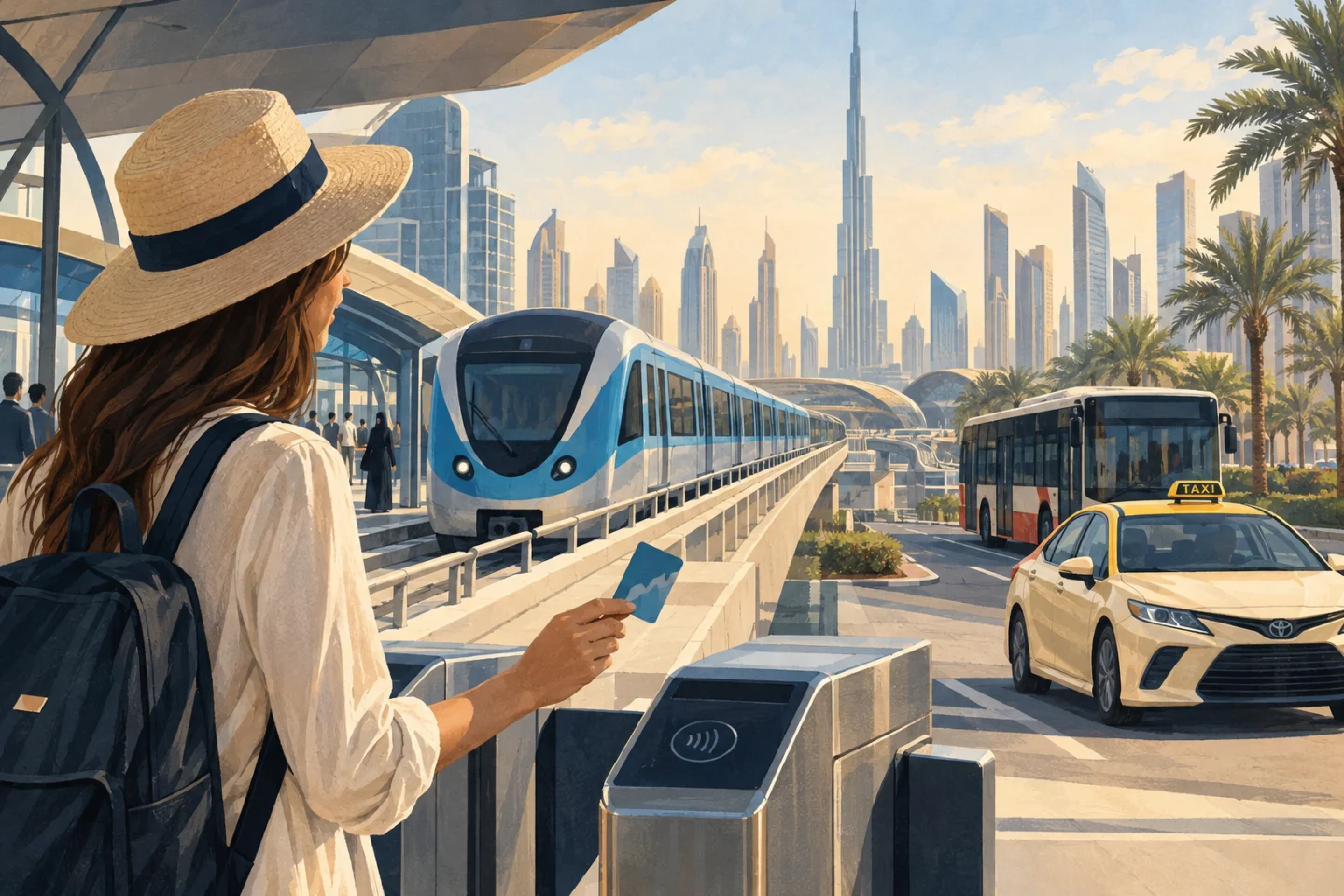
Dubai and transport: why it is a skill of its own
The city stretches for tens of kilometres along the coast: your hotel, your dinner spot and your tour meeting point are often at opposite ends. Walking is not realistic — distance and heat decide for you. So it helps to sort out three things straight away: how to pay (the Nol card), how to ride (metro, tram, bus) and when a taxi is simply the better call. All of it runs under the RTA, the emirate's roads and transport authority, so the payment system is shared across modes.
Nol card: where to buy it and why balance matters
Nol is a single travel card: you pay with it on the metro, tram, buses and water routes. There is no need to buy a separate ticket for each mode — the fare is deducted when you pass the gate or validator.
Where to buy:
- ticket desks and machines at metro stations — the easiest option for a visitor, and you can top up there too;
- machines at major bus stations;
- at the airport, if you land and plan to head straight for the metro — buy the card before you go down to the platform.
Three things most people discover at the gate:
- every passenger needs a card: “two of us on one card” does not work;
- you tap out of the metro as well — if the balance has gone negative, the gate will not open, so top up in advance;
- the card is reusable and the remaining balance carries over, so do not bin it on day one.
Which type of card to take
- you are in town for 1–2 days and plan a couple of rides — take the simple single-ride option;
- you are staying a week and ride daily — an ordinary top-up card is more convenient;
- first class and quieter rides matter to you — there is a card that allows the Gold carriage;
- the personalised card is aimed mainly at residents, visitors do not need to apply.
Check current fares and the deposit in the ticket office or on the RTA website: figures change from time to time, which is why we deliberately do not print them here. Keep your receipt too — it makes conversations at the information desk much easier.
Metro: where to board and where not to walk in
The Dubai metro is driverless, clean and predictable, and most tourist sights are close to a station. The red and green lines cross in the centre, so interchanges rarely take long.
Rule one: tap twice
On the way in and on the way out. Forget to tap out and you are charged the maximum fare, with a possible block on your next entry. Rule two: read the markings on the platform floor — they show where each carriage stops and where the space for prams and luggage is.
The Gold carriage and the classic “tracks ahead” shot
The photo of rails running into the distance is taken from the front carriage: it has a panoramic windscreen, effectively the driver's view. Note that the front carriage is first class (Gold), and you may only be there with the right ticket or card. A standard card will not get you through, and inspectors do check — this is one of the most common non-obvious mistakes. If the shot matters, buy a Gold-enabled card in advance instead of trying your luck.
The women and children carriage
One carriage is reserved for women and children and is marked on the platform. Men may not enter even for one stop; women travelling with a child will find it the most comfortable option.
What not to do on the metro
- no eating, drinking or chewing gum — fines apply;
- do not block the doors or push in before others get off: doors close quickly, but the next train is never far away;
- avoid rush hour with suitcases if you can wait — morning and evening carriages fill with commuters;
- do not photograph people close up without consent.
Buses: the most underrated option
Buses cover the districts the metro does not reach and often beat taxis in traffic. Payment is card only — drivers do not take cash. Stops are enclosed and air-conditioned, which matters enormously in summer.
- tap on entry, not “when asked”;
- seats at the front are usually reserved for women and children — give them up without being reminded;
- stops are announced and shown on a screen, but names often refer to the nearest mall rather than the street, so cross-check with a map on your phone.
Tram: short hops in Marina and JBR
The tram is the easiest way to move inside Dubai Marina, JBR and the neighbouring blocks: it runs along the water, stops frequently and links the metro with the beach and cafés. Its validators are separate, so you tap out of the metro and tap in on the tram — the interchange is not stitched together automatically.
Water transport: abras and water taxis
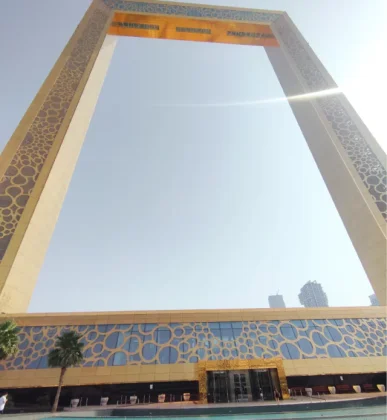
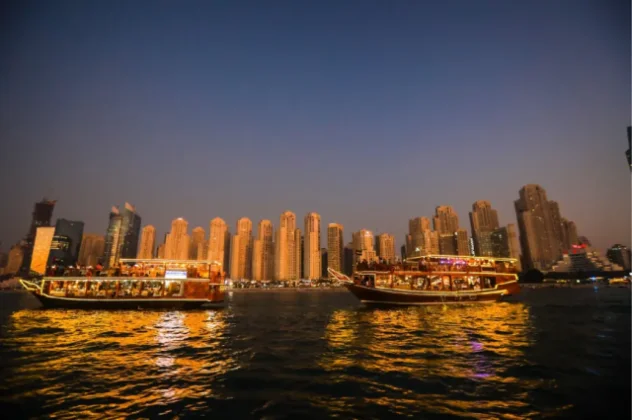
Traditional wooden abras cross Dubai Creek — the most atmospheric and cheapest way to get from one bank to the other, combined with a short cruise. Some water routes are paid in cash, others by card, so keep a little change on you. Sightseeing boats and dinner cruises are a different format: you book them in advance, and an evening in the Marina is a fine way to end the day.
Taxis: app, rank or hailing one
Official taxis are easy to recognise by livery and roof sign, and they run on a meter. Your options:
- a ride-hailing app — handy when you want a clear price and route;
- the official RTA taxi app — no aggregator markup, but a simpler interface;
- a taxi rank at your hotel, a mall or the airport — the easiest path if you would rather not deal with apps.
Rules that save money and nerves:
- do not get in with a driver who offers you a ride outside arrivals or at your hotel door: that is not an official taxi and the price will be guesswork;
- make sure the meter is on at the start; if the driver suggests a flat “deal”, politely decline and take another car;
- keep the receipt — it helps recover a forgotten item;
- at rush hour and on mall evenings taxis take longer to arrive and cost more, so the metro is genuinely faster;
- inter-emirate trips are allowed but cost more, and toll sections may be added to the fare;
- tips are optional, though rounding up is customary.
The airport is a story of its own: the official taxi rank and the metro (if your hotel sits near a station) are far more predictable than the “helpers” with clipboards in the arrivals hall.
A ready-made day on public transport
Morning: metro to the station by Dubai Mall, a walk around Burj Khalifa and the fountains while it is still cool. Midday: metro towards the Creek, an abra crossing and the spice souks. Evening: metro and tram to Dubai Marina, a promenade stroll and dinner on a boat. This route barely needs a taxi and keeps transport costs predictable.
What to book ahead and what to carry
Tickets for observation decks, parks and cruises are worth arranging in advance with KeyTravelUAE: after a long journey nobody wants a ticket queue, and popular time slots do sell out. In your bag: a bottle of water (drink anywhere except on transport), a cap, comfortable shoes, a power bank and a positive balance on your card. Also check how the station nearest your hotel actually looks on a map — in Dubai, the straight-line distance and the real walk through footbridges differ a lot.
If you would rather not deal with public transport
The alternative is a private guided tour by car: you are collected from your hotel, driven between photo stops and returned at the end. It costs more than the metro, but it saves energy on your first day and in the heat, and the route can be adjusted to suit you.
Quick checklist
- a Nol card for every passenger, and check the balance before you exit;
- metro: tap twice, and leave food and drinks outside;
- the “tracks ahead” photo — front Gold carriage with the right ticket only;
- bus and tram have their own validators and take no cash;
- taxis: official, metered, with a receipt — best via app or a rank;
- traffic and the evening peak are a good reason to switch to the metro.