
A road the desert is taking back
Half Desert Road is a stretch of asphalt in the desert zone of the Emirate of Dubai. Wind has been shifting sand across it for years: the tarmac appears under the wheels, then disappears beneath flat tongues of sand, and in places the road simply ends in the dunes. That is where the name comes from — the “half desert road”.
This is not a managed sight with ticket offices and information boards; it is the road itself that became a well-known photo location. Its appeal is contrast: a smooth dark surface, pale sand, dune ridges on both sides and the feeling that the city is far behind.
What to see and photograph
The main subject is the road: straight runs of asphalt, sand drifts cutting across the surface, tyre tracks, edges of sand trimmed by the wind. The second layer is the dunes beside the road — their ridges and slopes give texture and scale to a frame.
Light matters more than the subject here. At sunrise and towards sunset the sand gives soft, long shadows and warm tones; in the middle of the day the scene becomes hard and contrasty. In clear weather watch the highlights — both tarmac and sand blow out easily.
The spot works well as a short stop on the way into the desert or back: half an hour to an hour is usually enough for a look and a few shots.
Visiting conditions
Visiting is free: this is a public road, and driving it or stopping for photographs requires no tickets. There are no paid services on site — no ticket offices, rentals, cafés or maintained viewing areas. Bring water, fuel and snacks with you in advance.
Good to know
- Sand drifts can be soft: in a saloon car it is best to stay on the asphalt, while driving onto the sand calls for a 4x4 and experience.
- Do not block the roadway — other vehicles use the road too.
- Summer desert heat is severe: plan a morning or evening visit and take more water than you think you need.
- Take your rubbish with you: tyre tracks in sand disappear, plastic does not.
- The pattern of drifts changes after windy weather, so the “clean” section of road is slightly different each time.
If you want to add city views to a desert outing, Dubai's observation points are a natural follow-up — their cards are below.
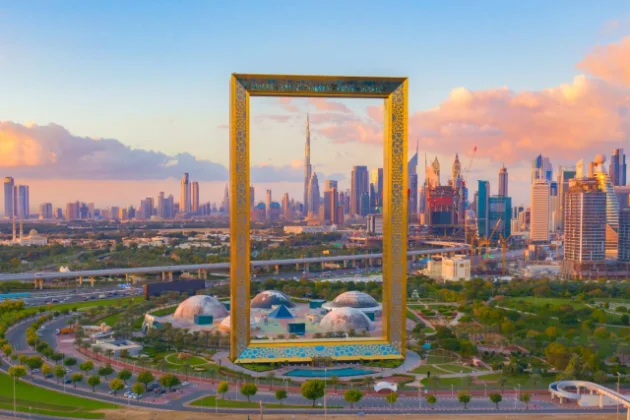
Dubai Frame
Open-date ticket

Visiting conditions
Visiting is free: Half Desert Road is a public road, no tickets or ticket offices are needed and stopping for photographs costs nothing. There are no paid services on site — no rentals, cafés or maintained areas — so bring water, fuel and everything you need with you. The asphalt is partly covered by sand and drifts can be soft, so in a saloon car it is best to stay on the solid surface; driving onto the sand requires a 4x4 and experience. Desert heat is severe in summer, so plan a morning or evening visit. Take your rubbish with you and do not block the roadway.
Free entry does not mean every service inside is free. Check current visiting conditions with the venue before travelling.
Getting there
The spot lies beyond the city, in the desert zone of the Emirate of Dubai. Public transport does not reach it — you need a car or a taxi. The easiest approach is to enter the coordinates 25.139323, 55.467237 into a navigation app and check the route on the map before setting off: the final kilometres run through desert terrain, and both the access tracks and the sand drifts change after windy weather. It makes sense to leave Dubai in the morning or in the afternoon so as not to drive in the hottest part of the day. Refuel and take water in advance: along these desert stretches you should not count on shops or petrol stations next to the road. In a saloon car, stay on the asphalt and park on the hard surface rather than on the sand. Driving into the dunes requires a 4x4 and experience of sand driving; it is better not to attempt such detours alone. The road combines well with desert routes and trips towards Al Qudra and the southern parts of the emirate, so it can be included in the same day as other desert stops. Check the exact route in your navigation app right before the drive — sand drifts can cover individual sections.